If you’ve been anywhere near K-Beauty 2026 trends lately, you’ve probably heard about PDRN skincare. Maybe you’ve seen those Rejuran Healer posts on Instagram, or noticed salmon DNA serums popping up at Olive Young. The words “salmon sperm serum” make you cringe, you’re not alone—I gagged first, Googled second, wondering—is this actually legit, or just another overhyped ingredient that’ll fade into obscurity by next year?
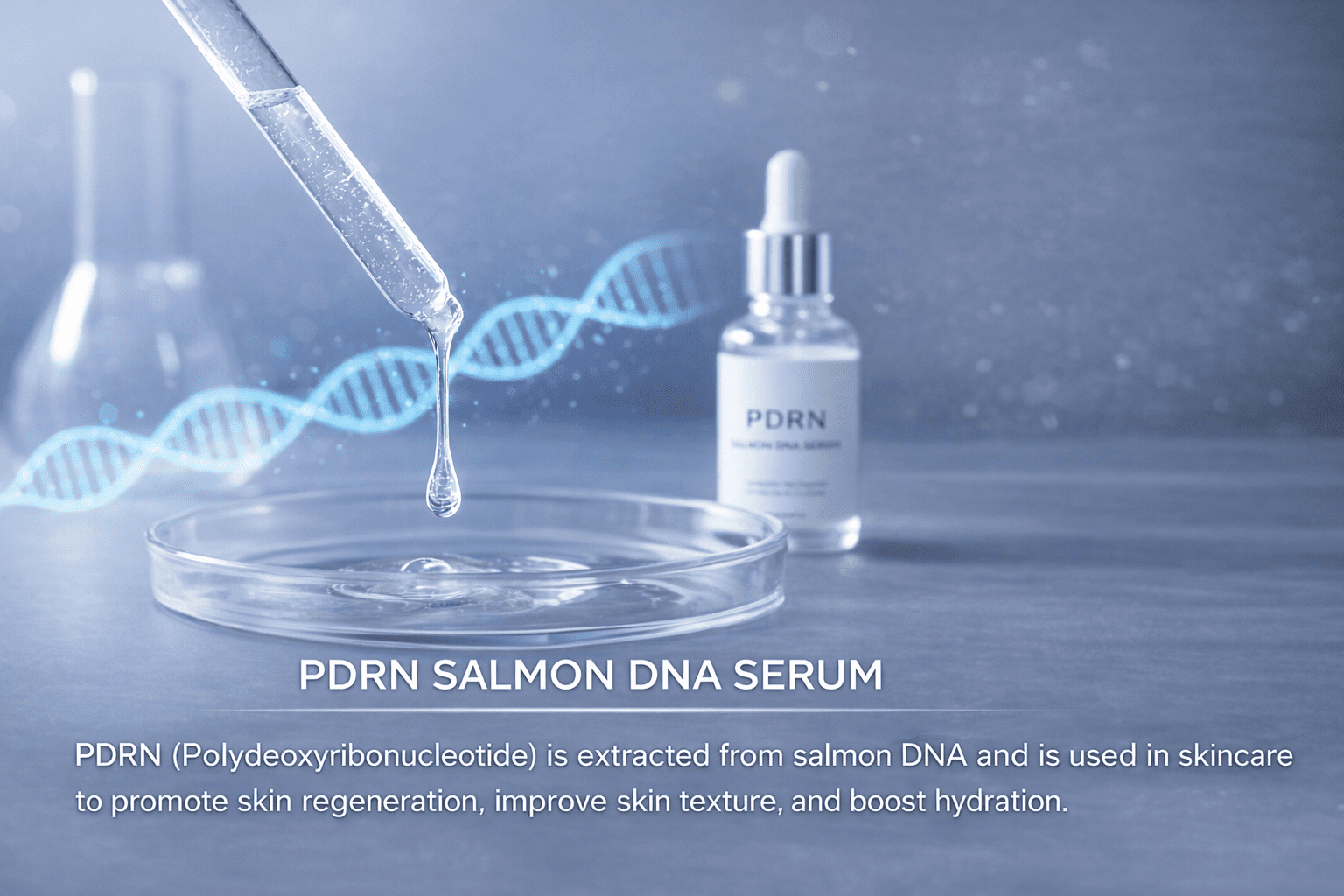
What Actually Is PDRN and Why Salmon DNA?
- PDRN stands for polydeoxyribonucleotide, which is a fancy way of saying short fragments of DNA. extracted from salmon sperm—specifically from chum salmon.
- Before you scrunch your nose at the thought of fish DNA on your face, here’s something wild: salmon DNA shares about 95% similarity with human DNA. That’s not a marketing gimmick—it’s actual biology. This genetic closeness is precisely why our skin accepts PDRN so readily, instead of treating it like a foreign invader.
- The ingredient itself looks nothing like fish, by the way. By the time it reaches your serum bottle, PDRN has been purified and processed into a precise molecular extract. It’s sterile, odourless, and designed specifically to communicate with your skin cells. Like snail mucin, PDRN is one of those ingredients that sounds gross, works surprisingly well, and suddenly you’re defending fish DNA like it’s your thing.
Here’s a quick origin story: Italian researchers developed PDRN back in the 1990s, primarily for healing stubborn wounds. Korean dermatologists caught on in the 2010s and started using it in aesthetic clinics. By 2020, clever formulators figured out how to put it in serums and creams. Now it’s everywhere—and honestly, for good reason.
How Does PDRN Work on Your Skin?
This is where things get interesting. PDRN doesn’t just sit on your skin looking pretty. It actually triggers a cascade of cellular events that lead to real, measurable changes.
The Adenosine Connection
- Your skin cells have these receptors called adenosine A2A receptors. When PDRN molecules bind to these receptors, they essentially flip a switch that tells your cells: “Hey, time to repair and regenerate.”
- This activates the salvage pathway—your cells’ natural recycling system. They start reusing DNA fragments to build new, healthy cells more efficiently. It’s like giving your skin’s repair crew better tools and extra motivation.
Blood Flow Boost
- One of PDRN’s most impressive tricks is stimulating the formation of new tiny blood vessels in your skin. More blood vessels mean better oxygen and nutrient delivery to your cells. This is a huge benefit for ageing skin, which often struggles with sluggish circulation. The result? That lit-from-within glow people always talk about.
Collagen Factory Activation
- PDRN wakes up your fibroblasts—the cells responsible for producing collagen, elastin, and hyaluronic acid. But it doesn’t just boost production randomly. It specifically increases Type I, III, and VII collagen, which are exactly the types that deplete as we age. This targeted approach is why people see genuine improvements in firmness and fine lines, not just temporary plumping.
Calming Inflammation
- Here’s something that sets PDRN apart from many anti-ageing ingredients: it’s genuinely soothing. It reduces inflammatory markers like TNF-α and IL-6 while boosting calming signals like IL-10. This makes it remarkably gentle, even on reactive, rosacea-prone, or post-procedure skin.
DNA Repair Support
- The nucleotides in PDRN also provide raw materials for your skin’s natural DNA repair processes. This helps address existing sun damage while building resilience against future environmental stress.
What Does the Research Actually Say?
Wound Healing Results
- A significant study on diabetic foot ulcers found that PDRN nearly doubled the complete healing rate compared to placebo—37.3% versus 18.9%. Skin regeneration over wounds also improved dramatically. These aren’t cosmetic studies, but they demonstrate PDRN’s genuine tissue repair capabilities.
Anti-Ageing Evidence
-
A 2022 study from the Korean Dermatological Society compared topical PDRN (1% concentration) against injectable versions over 12 weeks. The topical version achieved about 78% of the injectable’s results—specifically, a 52% improvement in wrinkle depth versus 67% for injections.
-
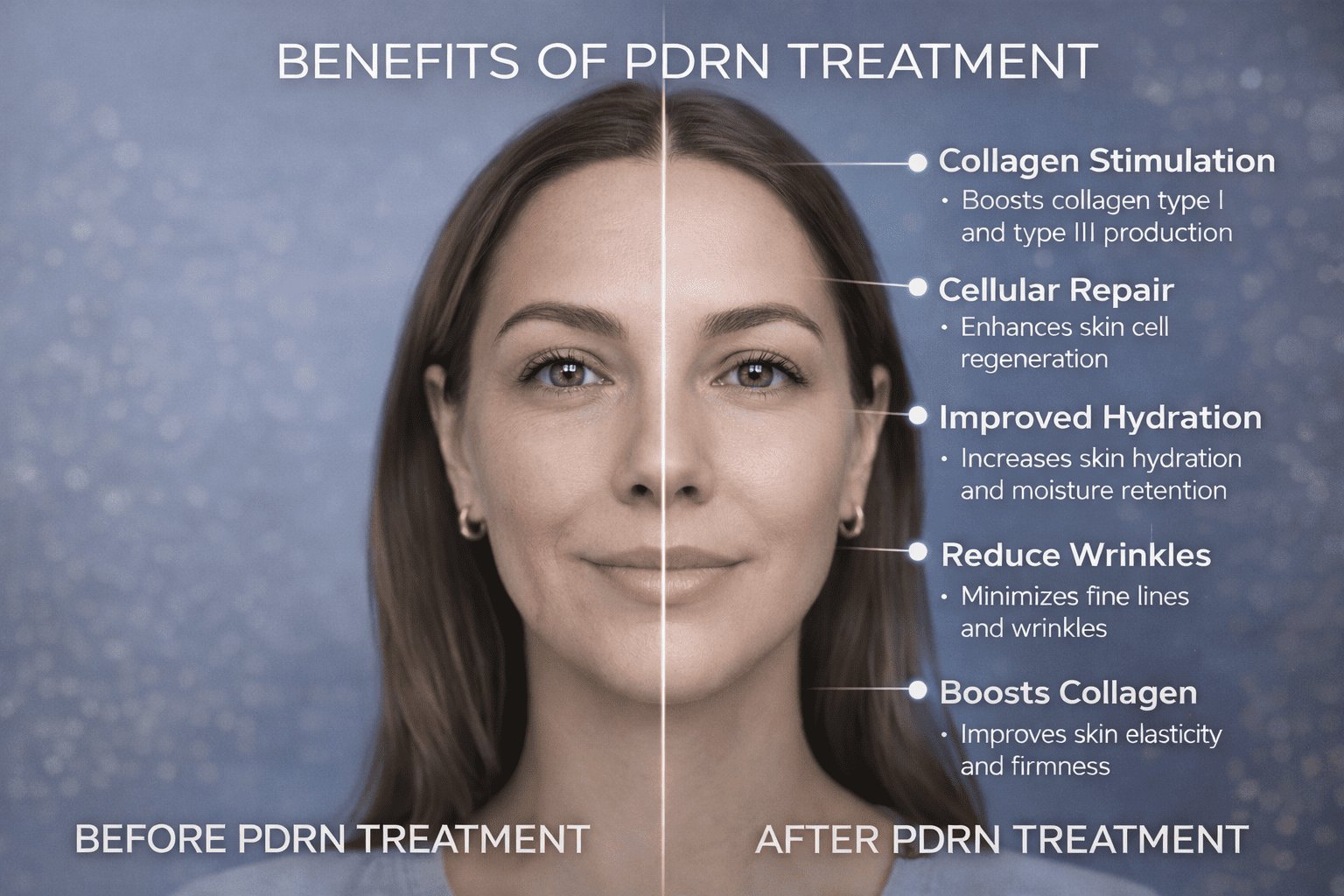
Another split-face study (where one side of the face gets the treatment and the other doesn’t) found eight weeks of topical PDRN use resulted in:
- 47% reduction in fine lines
- 39% improvement in elasticity
- 41% increase in hydration
-
Those are genuinely impressive numbers for a topical ingredient.
Safety Data
- This is important: over 300,000 PDRN prescriptions have been tracked over five years with minimal adverse events reported. Toxicity testing showed no harmful effects on major organs even at high doses. The safety profile is genuinely excellent.
What Can PDRN Skincare Do For Your Skin?
Based on the research and clinical experience, here’s a realistic breakdown:
- Fine lines and wrinkles: Expect visible softening within 4-8 weeks, with optimal results around 12 weeks. Studies show a 52-67% reduction in wrinkle depth depending on whether you use topical or injectable forms.
- Acne scars and texture: PDRN skincare accelerates tissue remodelling and collagen deposition. Depressed scars can show improvement, though this typically takes 6-12 weeks and multiple treatment sessions for significant change.
- Barrier repair and hydration: This is where PDRN shines quickly. Many people notice improved moisture retention and reduced sensitivity within 2-4 weeks.
- Redness and inflammation: The anti-inflammatory effects kick in relatively fast—often within 1-2 weeks. This makes PDRN skincare particularly valuable for rosacea-prone skin or post-treatment redness.
- Dullness and uneven tone: By promoting healthy cell turnover and inhibiting excess melanin production, PDRN can brighten skin and fade dark spots over 6-8 weeks.
- Firmness and elasticity: The collagen-boosting and neovascularisation effects take time to show—typically 8-12 weeks—but the improvements are genuine and lasting.
Injectable vs. Topical: Which One Should You Choose?
Injectable PDRN
This is the gold standard for dramatic results. Injections deliver 3-5% PDRN concentration directly into your dermis, where collagen synthesis actually happens.
The pros:
- Direct access to fibroblasts means stronger results.
- Visible improvement in 2-4 weeks
- Better for deep wrinkles and significant acne scarring
- Results that build with each session
The cons:
- Requires a professional
- Temporary bruising and swelling
- Costs inbetween ₹18,322 – ₹54,903 per session internationally
- 24-48 hours of downtime
- Needs periodic maintenance sessions
Topical PDRN (Serums and Creams)
These contain lower concentrations (1-2%) and work primarily in the epidermis and upper dermis.
The pros:
- Use it daily at home.
- No pain, bruising, or downtime
- Excellent for barrier repair and ongoing maintenance
- Achieves about 78% of injectable efficacy in some measures
- Much more affordable
- Works beautifully with other skincare ingredients
The cons:
- Can’t penetrate as deeply
- Results take longer to appear (4-8 weeks versus 2-4)
- Won’t replace injectables for severe photoaging or scarring
- Requires consistent long-term use
The Smart Approach: Combine Both
Many dermatologists now recommend a hybrid strategy: start with an injectable series to achieve structural improvements, then maintain results with daily topical PDRN. A typical protocol looks like:
- Months 1-3: 4-6 injectable sessions, spaced 3-4 weeks apart
- Ongoing: Daily topical PDRN serum
- Periodic boosters: 1-2 injectable sessions annually as needed
This approach maximises results while keeping costs manageable.
Is PDRN Actually Safe?
- For most people, absolutely. PDRN ranks among the safest active ingredients in modern skincare, and here’s why:
- It’s biocompatible with human DNA, so your body doesn’t treat it as a threat. It’s non-hormonal and doesn’t get absorbed systemically. The purification process removes proteins that might trigger reactions. And thirty years of clinical use have confirmed its safety.
Possible Side Effects
When reactions occur, they’re typically mild and temporary:
- Temporary redness or flushing (especially on sensitive skin)
- Localised swelling at injection sites (injectable only)
- Small bumps that resolve within a day or two (injectable only)
- Occasional mild itchiness that usually subsides with continued use
Most of these relate to the injection process itself rather than PDRN specifically. Topical versions rarely cause issues beyond occasional sensitivity on severely compromised skin.
The Important Exception: Fish Allergies
- If you’re allergic to fish or seafood, proceed with caution. PDRN comes from salmon sperm, and while the purification process is thorough, shared protein structures could theoretically trigger a reaction in fish-allergic individuals.
- My recommendation: If you have a fish allergy, do a 48-hour patch test on a small area before applying anywhere visible. Or skip it entirely and wait for plant-based alternatives that are starting to emerge.
Other Situations to Avoid PDRN
- During pregnancy or breastfeeding: Not because it’s proven harmful, but because elective aesthetic treatments are typically postponed during this time
- Active skin infections or severe inflammation: Let things calm down first
- Severe recent facial trauma: Wait 2-4 weeks before applying to healing wounds
- Active breakouts: While PDRN isn’t comedogenic, introducing new actives during an active breakout can sometimes make things worse